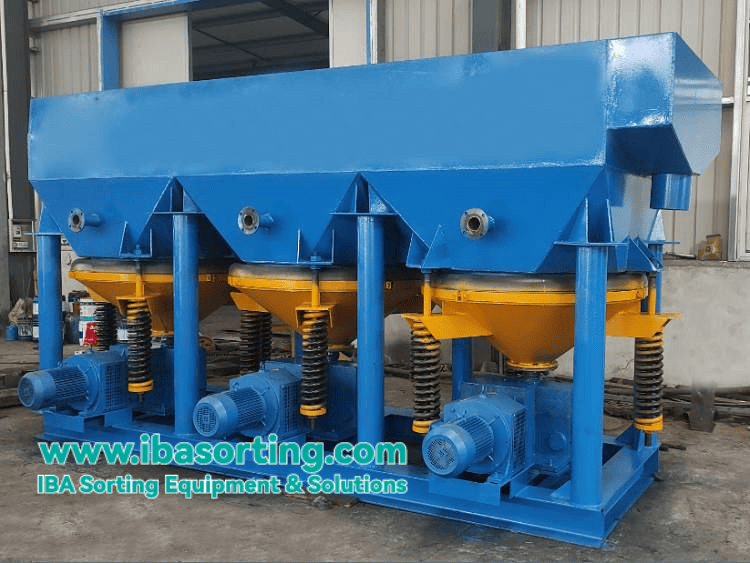
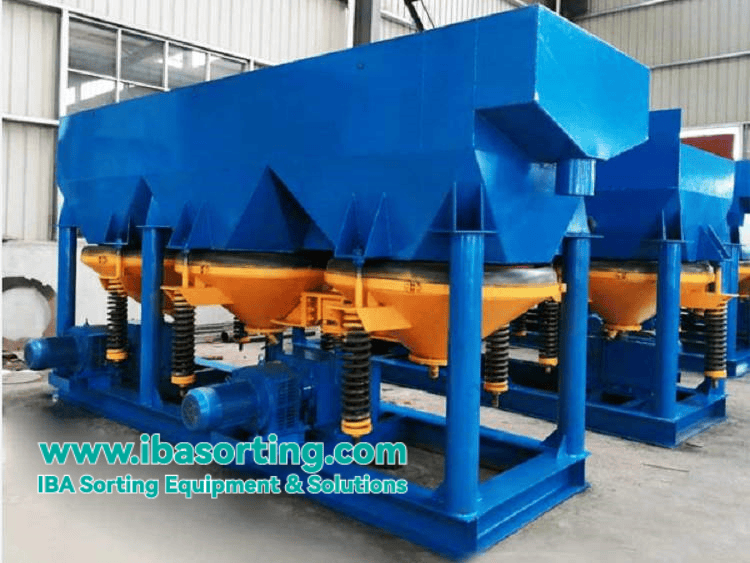
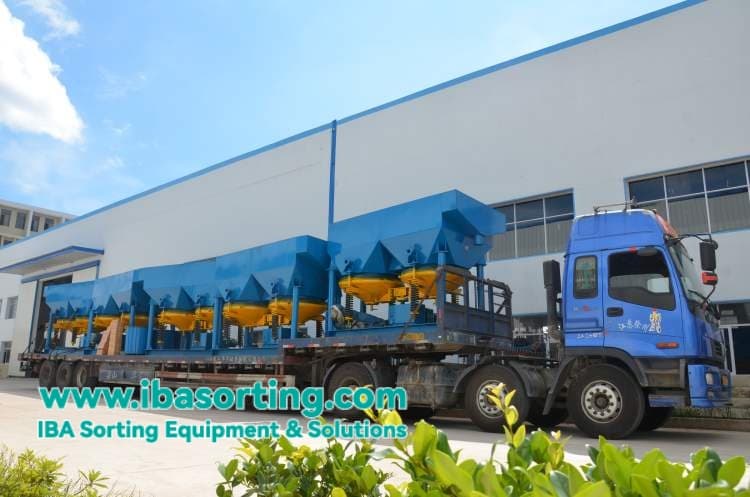
In wet Incineration Bottom Ash (IBA) processing, efficiently separating high-density valuable metals from lighter slag is critical for profitability. The Sawtooth Wave Jig is an advanced gravity concentrator specifically optimized for heavy metal recovery in Waste-to-Energy (WtE) slag sorting lines.
Utilizing a unique pulsation curve, this equipment excels at extracting heavy non-ferrous metals—such as copper, brass, zinc, and even precious metals—from complex solid waste mixtures. It is a highly efficient, energy-saving alternative to traditional sinusoidal wave jiggers, forming a crucial part of our comprehensive IBA Sorting Solutions.
Core Working Principle: The "Fast Up, Slow Down" Advantage
The equipment is driven by an electromagnetic speed-regulating motor that generates a distinct sawtooth jigging pulsation curve in the water flow:
- Rapid Rising Water Flow: Quickly lifts and loosens the mixed IBA bed, breaking apart trapped particles.
- Slow Descending Water Flow: Provides extended settling time, allowing high-density metal particles (e.g., copper, stainless steel) to effectively penetrate the bed and separate from the lighter ash and glass.
This optimized hydrodynamic process drastically improves the stratification efficiency, leading to a much higher recovery rate of heavy metals compared to standard gravity separators.
Highlighted Performance Benefits for IBA Sorting
| Advantage |
Specific Performance in Slag Processing |
| 🔄 Higher Metal Recovery Rates |
Significantly improves the extraction of heavy metals from bottom ash compared to traditional jiggers (e.g., enhanced copper, lead, and zinc recovery). |
| 💧 30%-40% Water Savings |
Utilizes a composite discharge method that drastically reduces the need for make-up water, lowering the burden on downstream Filter Presses. |
| 📦 Compact Plant Footprint |
Saves up to 1/3 of the floor space compared to conventional gravity equipment, making it ideal for retrofitting existing WtE facilities. |
| ⚙️ Intelligent Adjustability |
Features stepless speed regulation and adjustable strokes to match varying IBA compositions and particle sizes (up to 30mm feed size). |
Application: Beyond Traditional Mining
While traditionally used in mining, our specially calibrated Sawtooth Wave Jig is now a cornerstone in wet solid waste recycling:
- ◾ Incineration Bottom Ash (IBA): Recovering heavy non-ferrous metals (copper, brass, zinc) that bypass eddy current separators.
- ◾ Scrap Metal Shredder Residue: Separating fine metal particulates from plastics and glass.
- ◾ Large Particle Processing: Highly effective at processing coarse materials, accepting a maximum feed size of up to 30mm.
Frequently Asked Questions (FAQ)
Q: Why use a Jig instead of relying solely on Eddy Current Separators for IBA?
A: While Eddy Current Separators are excellent for lightweight metals like aluminum, they struggle with heavier, poorly conductive metals like stainless steel, heavy copper wire, and brass. The Sawtooth Wave Jig uses gravity (density differences) to capture these high-value heavy metals, ensuring maximum plant profitability.
Q: What is the maximum feed size the Sawtooth Wave Jig can handle?
A: Our jig can effectively process crushed bottom ash with a maximum particle size of up to 30mm. For larger slag, we recommend pre-processing the material with our IBA Specialized Crushers.
Q: Does the wet jigging process create wastewater issues?
A: Our Sawtooth Wave Jig is designed to use 30%-40% less water than traditional models. Furthermore, in our complete wet sorting solutions, the process water operates in a closed loop. The discharge is sent to dewatering screens and sludge filter presses, ensuring zero liquid discharge and compliance with environmental regulations.