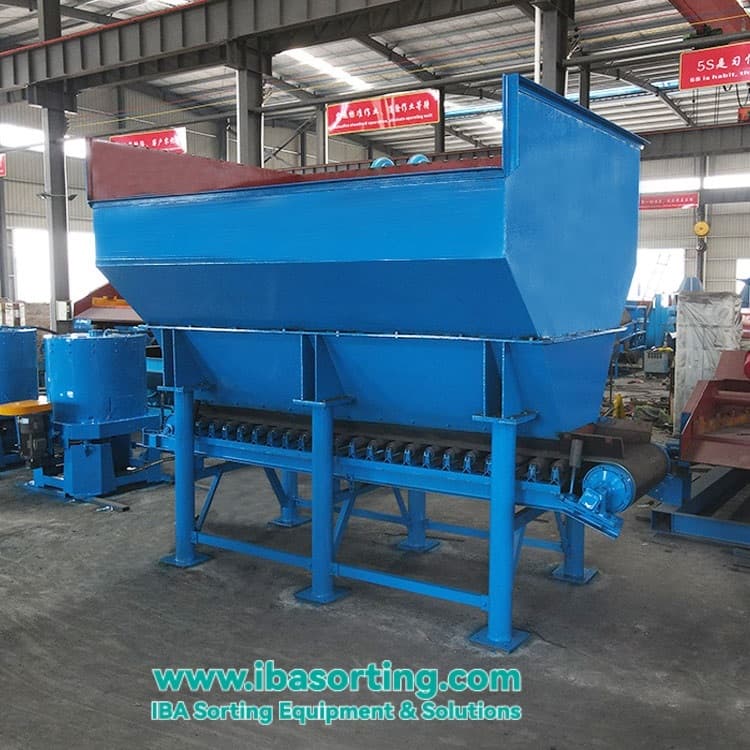
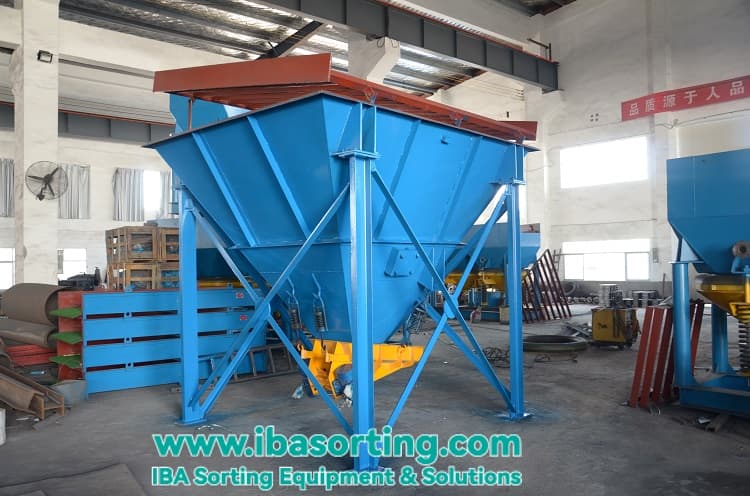
In a complete Incineration Bottom Ash (IBA) processing plant, material flow is rarely perfectly consistent. Surges from the incinerator discharge, varying slag densities, and intermittent loader feeding can cause severe bottlenecks. The IBA Buffer Bin (Surge Hopper) is the critical pivotal equipment designed to absorb these fluctuations.
Used for intermediate storage, buffering, and balanced feeding, it effectively solves production mismatches between upstream crushers and sensitive downstream sorting equipment (like Eddy Current Separators). By ensuring a stable, metered supply of slag, the buffer bin maximizes the automation level, safety, and continuous production efficiency of the entire WtE facility.
Core Functions in Slag Processing
A buffer bin is much more than a simple storage tank. It is an active flow-control device that protects your plant's profitability.
- Eliminate Production Bottlenecks: Absorbs the fluctuating, intermittent output of raw slag delivery (e.g., from wheel loaders or grab cranes), converting it into a continuous, steady stream for the processing line.
- Balance Equipment Capacities: Solves the mismatch between high-capacity primary equipment (like Trommel Screens) and precision downstream sorting units, preventing overloading and spillage.
- Prevent Material Blockages: Avoids system-wide shutdowns caused by the sudden halting of front-sequence equipment or the clogging of back-sequence machines.
- Emergency Buffer: In the event of a short-term failure or routine maintenance on downstream machines, the bin provides temporary material storage, buying crucial time without forcing the incinerator to halt ash discharge.
System Components & Architecture
| Component |
Description & Function |
| Heavy-Duty Silo Body |
Constructed from thickened carbon steel or stainless steel, engineered with precisely calculated wall angles to ensure smooth discharge and prevent "bridging" or "rat-holing" of sticky wet ash. |
| Feeding Mechanism |
Accepts material directly from wheel loaders, grab cranes, or upstream belt conveyors, acting as the primary receiving point. |
| Controlled Discharge Feeder |
The core control element at the base. We equip our bins with Electromagnetic Vibrating Feeders, belt feeders, or bar valves to provide quantitative, adjustable material supply to the next stage. |
| Top Grid (Grizzly) |
Optional heavy steel grid over the intake to prevent massive unburnable objects (like mattresses or engine blocks) from entering the bin and blocking the discharge. |
Key Application Scenarios
- ◾ Primary Plant Intake: Acting as the main receiving hopper for raw incineration bottom ash delivered by loaders from the WtE cooling pit.
- ◾ Pre-Sorting Buffer: Installed before sensitive Eddy Current Separators to ensure the slag is fed in a thin, uniform monolayer, which is an absolute requirement for high recovery rates.
- ◾ Transit & Distribution: Acting as a central transit silo to split a single material flow into two or more parallel downstream processing lines.
Frequently Asked Questions (FAQ)
Q: How do you prevent wet, sticky bottom ash from bridging inside the bin?
A: Wet IBA is highly cohesive and prone to "bridging" (forming an arch that stops material flow). We design our Buffer Bins with steep, asymmetrical cone angles and equip the exterior walls with high-frequency vibrators or air cannons. This breaks surface tension and ensures continuous, smooth discharge even with high-moisture ash.
Q: Can the discharge rate be adjusted?
A: Yes. The bin is typically paired with a variable-frequency Vibrating Feeder or Belt Feeder. Operators can easily adjust the feeding rate via the central PLC control panel to perfectly match the processing capacity of the downstream equipment.