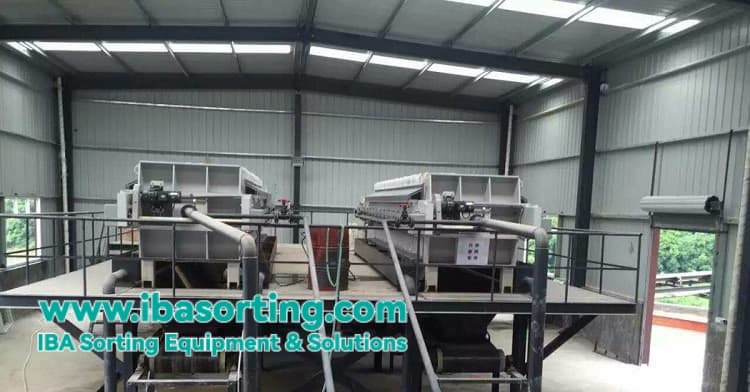
In a wet Incineration Bottom Ash (IBA) Sorting Plant, separating metals from slag generates process water that becomes heavily loaded with fine, toxic ash, chlorides, and heavy metal dust. To comply with strict environmental regulations, this wastewater cannot be discharged.
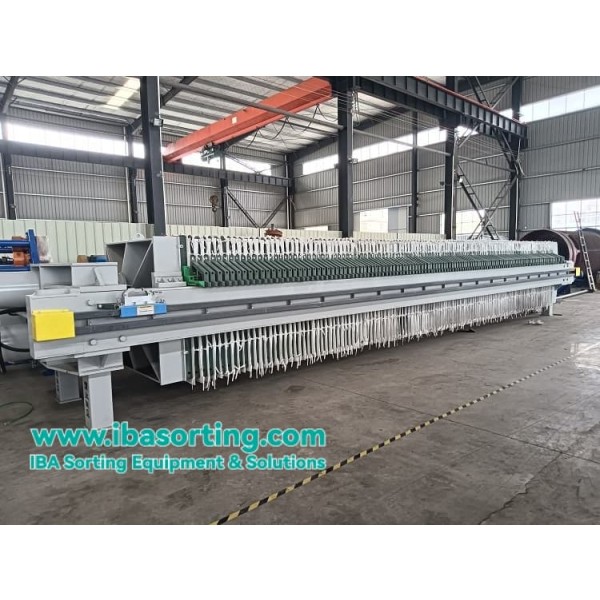
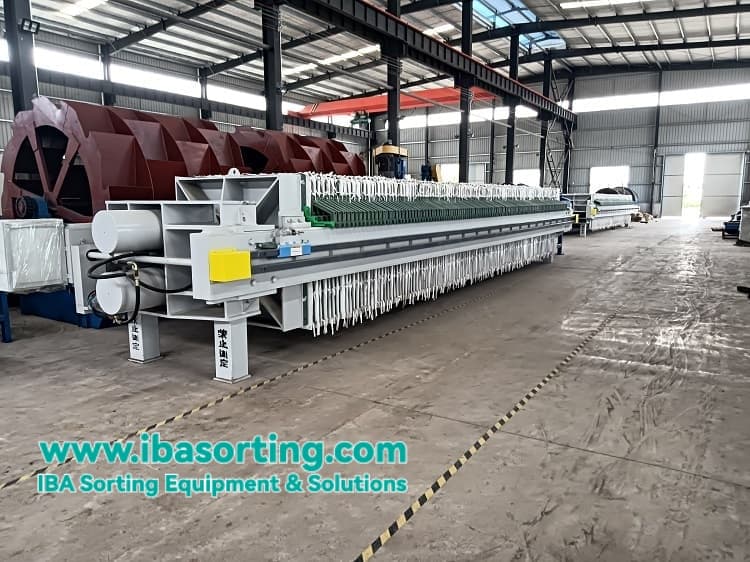
The IBA Sludge Filter Press is the critical end-stage equipment designed to close the water loop. By utilizing high-pressure solid-liquid separation, it efficiently dewaters difficult, highly viscous municipal sludge.
It compresses the hazardous fines into dry, easy-to-handle solid cakes for safe landfill disposal, while recovering clear, purified filtrate water that is instantly recycled back into the Slag Washing Machines and Jigs, achieving a true Zero Liquid Discharge (ZLD) operation.
Core Working Principle: High-Pressure Filtration
The filter press operates through a cyclical batch process, driven by an automated hydraulic system to squeeze the maximum amount of water from the IBA sludge.
- Compression: The hydraulic cylinder powerfully pushes the compression plate forward, tightly sealing all the individual filter plates together to form empty, watertight filter chambers.
- Feed Filtration: A high-pressure feed pump forces the thickened IBA sludge into the chambers. As pressure builds, the solid ash particles are trapped by the specialized filter cloths, while the clear liquid (filtrate) passes through.
- Pressure Squeezing: The feed pressure is maintained (up to 3.0 MPa) to thoroughly squeeze the trapped solids, forming dense, low-moisture mud cakes.
- Unloading: The hydraulic system retracts, and the automatic plate puller separates the plates sequentially. The dry sludge cakes fall freely due to gravity into a collection bin below.
Core Advantages for WtE Sludge Dewatering
| Advantages |
Specific Benefits for IBA Sorting |
| ✅ Maximum Moisture Reduction |
Operating at extreme pressures (up to 3.0 MPa), the press forces out stubborn moisture from fine ash, significantly reducing the total volume and weight of the toxic sludge, slashing landfill disposal costs. |
| ✅ Excellent Filtrate Clarity |
The high-precision filter cloths capture fine particulate matter (<0.01mm). The resulting clear water is immediately ready to be pumped back to the washing circuit, drastically reducing municipal water consumption. |
| ✅ Fully Automated PLC Control |
The integrated electrical and hydraulic system controls the entire cycle—pressing, feeding, maintaining pressure, and plate pulling—allowing a single operator to manage the entire wastewater station. |
| ✅ Adaptable Chamber Volume |
The modular frame allows for 20 to 120 filter plates. We customize the filtration area based strictly on your WtE plant's daily tonnage and slurry concentration. |
Key Application Scenarios in Resource Recovery
- ◾ IBA Wet Processing Plants: Dewatering the toxic overflow slurry generated by Jigging, Wet Magnetic Separation, and Slag Washing.
- ◾ Sand and Aggregate Washing: Processing stone powder sludge from construction and demolition (C&D) waste recycling.
- ◾ Environmental Protection: Dewatering industrial wastewater treatment sludge, fly ash, and municipal sewage.
Technical Specifications
| Specification Item |
Description / Value |
| Optimal Feed Concentration |
≤ 10% suspended solids (Requires pre-thickening) |
| Standard Working Pressure |
0.3 - 1.5 MPa |
| Max Design Pressure |
≥ 3.0 MPa (For ultra-viscous ash) |
| Number of Filter Chambers |
20 to 120 plates (Customized based on daily tonnage) |
| Filter Plate Material |
Reinforced Polypropylene (Highly corrosion/chloride resistant) |
| Automation Level |
Full PLC Control + Automatic Plate Puller |
Frequently Asked Questions (FAQ)
Q: Why choose a Filter Press over a Belt Press for IBA sludge?
A: While belt presses operate continuously, they cannot achieve the high squeezing pressure required for ultra-fine, viscous incinerator ash. The Filter Press applies immense hydraulic pressure (up to 3.0 MPa), resulting in a much drier, harder cake. This drastically reduces the volume of hazardous waste you must pay to landfill, providing a rapid return on investment.
Q: Can the wastewater be pumped directly into the Filter Press?
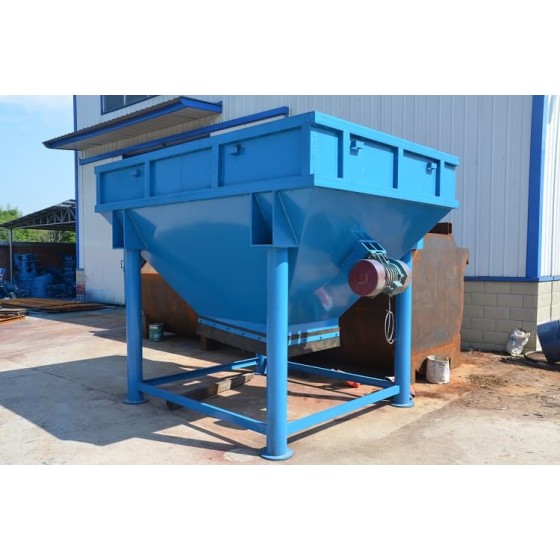
A: No. Pumping highly dilute wastewater directly into the press is extremely inefficient. The raw wastewater must first pass through a Deep Cone Thickener (clarifier) with the addition of flocculants (PAC/PAM). This settles the solids, feeding a concentrated sludge (usually ≤10% liquid) into the Filter Press for rapid, effective dewatering.